The Breakup Story You Told Everyone Was Healing — The One You're Still Living In Is a Whole Different Thing
Somewhere between the actual breakup and the three-month anniversary of it, something shifted. Not inside you — not in any real, felt way. But in the story you were telling.
You got your voice back. You figured out the angle. You knew exactly how to frame it: what he did wrong, what you learned, how you're choosing yourself now. You posted something that hit. People responded. Your DMs filled up with this is exactly what I needed to hear and you are so strong and maybe even a podcast episode or a voice memo or a TikTok where you talked about it with just enough vulnerability to feel brave but not so much that it was actually uncomfortable.
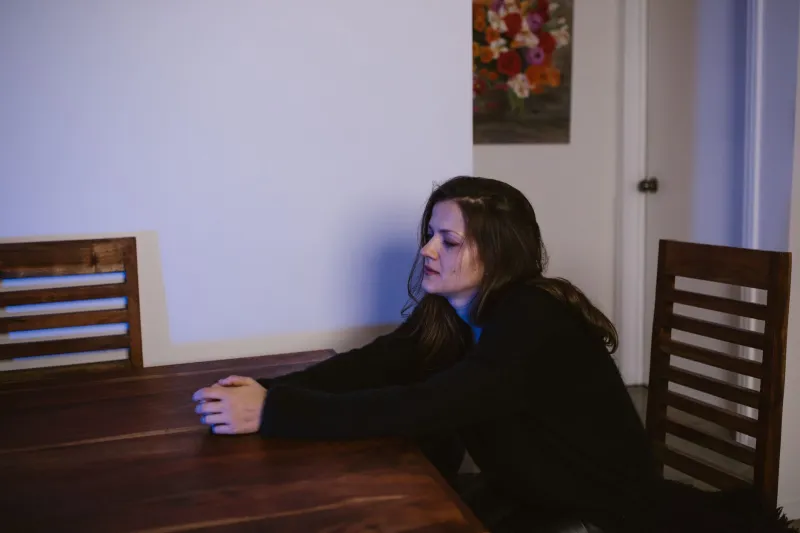
And then you closed the app. And you sat in your apartment. And you still felt like absolute garbage.
Welcome to the part nobody posts about.
The Narrative Took Over Before the Grief Could Catch Up
Here's the thing about turning your pain into content — and I'm using that word broadly, because it doesn't have to be a post with 10,000 likes. It could be the story you told your best friend. The way you explained it to your coworkers. The version you gave your mom so she'd stop asking. We are all, constantly, packaging our experiences into something digestible for whoever is asking.
And the problem isn't that we do it. The problem is that we do it fast. Like, embarrassingly fast. Before the grief has had a chance to settle into its actual shape, we've already handed it a narrative arc and a lesson and a resolution that makes sense to other people.
Because that's what we've been trained to do. We live in a culture that rewards the turnaround. The comeback. The person who went through something terrible and came out with three actionable takeaways and a new morning routine. There is almost no cultural space — online or off — for the person who went through something terrible and is just... still in it. Still confused. Still grieving a relationship they know wasn't right for them. Still checking someone's Instagram at 11pm even though they'd never admit it.
That person doesn't get the engagement. So we skip her. We skip right past her to the version of ourselves that's already on the other side.
You Published the Lesson Before You Actually Learned It
I've done this. I think most of us have. You're in the thick of something, and you find a way to articulate a piece of it that sounds wise — and because it sounds wise, you start to believe the wisdom is complete. Like you've figured it out. Like the fact that you can describe the pattern means you've broken the pattern.
But describing pain and processing pain are not the same thing. Not even close.
You can write the most accurate, emotionally intelligent breakdown of why a relationship didn't work — the attachment styles, the communication failures, the ways you both needed things the other couldn't give — and still cry in your car about it six months later because you miss him. Those two things can exist at the same time. The insight doesn't cancel out the ache. It just makes you feel like it should, which honestly makes the ache worse.
There's a specific kind of loneliness that comes from having already told your story. Because now, when you're struggling, you feel like you're backsliding. Like you're betraying the version of yourself you already announced to the world. Like you owe people the healed ending because you already teased it.
The Edited Version of Your Pain Is Still a Performance
This is where I want to be really honest with you, because I think we dance around this a lot: the raw and real breakup post is still curated. The crying selfie is still a choice. The voice memo where you sound like you're barely holding it together is still a take you decided to share, which means it's still a take you decided to shape.
None of that is bad, exactly. Expression is human. Sharing is human. Wanting people to see you and recognize themselves in you — that's one of the most human things there is.
But there's a version of your grief that exists only for you. The one that doesn't have words yet. The one that doesn't make sense and isn't a lesson and isn't going to help anyone else because it's just yours, raw and unprocessed and sitting in the middle of your chest at 2am. And that version deserves time. It deserves your attention. It deserves to exist without being turned into something.
When we rush to the narrative — when we package the heartbreak before we've actually moved through it — we end up performing healing rather than doing it. And the performance is exhausting in a way that's hard to name, because it looks from the outside like you're doing great.
What Happens When the Story and the Reality Stop Matching
Eventually, the gap between the story you told and the reality you're living creates this low-level dissonance that's hard to shake. You said you were over it. You said you learned. You said you're choosing yourself. And technically, you meant all of that when you said it. But grief doesn't move in a straight line, and the timeline you published doesn't account for the Tuesday night three months later when something random — a song, a smell, a restaurant you used to go to — undoes all of it.
And instead of just letting that be what it is — a grief wave, totally normal, part of the process — you feel like a fraud. Like you lied. Like you have to now either hide this from everyone or dramatically revise the story you already told.
You don't. You really don't.
Grief is not a content arc. Healing is not a three-act structure. Real recovery is nonlinear and unglamorous and full of moments that would make terrible captions. That's not a failure of your healing — that's just what healing actually looks like when no one's watching.
Give Yourself the Version You Didn't Post
The most radical thing you might be able to do right now — if you're in the middle of something, or if you're carrying around a story you told too soon — is to give yourself access to the unedited version. Not for anyone else. Not for a future post. Just for you.
Let it be messy. Let it not have a lesson. Let it be the part where you're still sad about something you know wasn't good for you, because knowing something intellectually and feeling it in your body are two completely different timelines, and you don't have to pretend otherwise.
The story you told everyone might have been true. It might even have been helpful — for them, for you in that moment, for the community you were speaking to.
But you are allowed to be more than the most polished version of your own pain. You are allowed to still be in it, even after you said you weren't.
That's not backsliding. That's just being a person. And that part? That part doesn't need an audience.